Overview of Chart types
DHTMLX Chart includes 13 chart types, so you can display your data in the best way. Every type is fully configurable.
The list below groups the types by kind:
- Line and Spline chart
- Bar and X-Bar chart
- Area and SplineArea chart
- Pie, Pie 3D and Donut chart
- Radar chart
- Scatter chart
- Treemap chart
- Calendar heatmap chart
Line and Spline chart
A basic chart type that shows how trends change over time. Use it to display price dynamics over a year or staff growth over several years. Choose this type when your data has more than 10 items.
Line chart
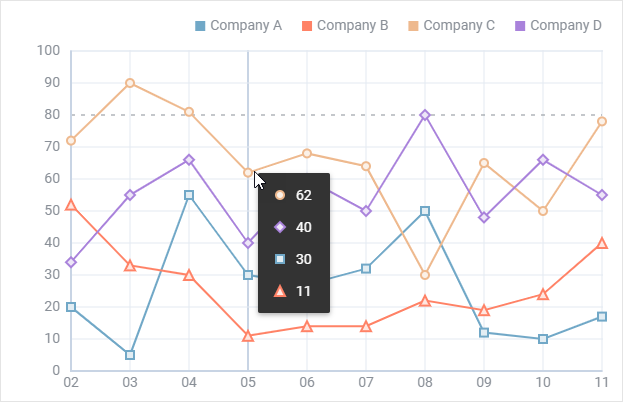
Related sample: Chart. Line chart initialization
Related article: Line and Spline chart configuration
Spline chart
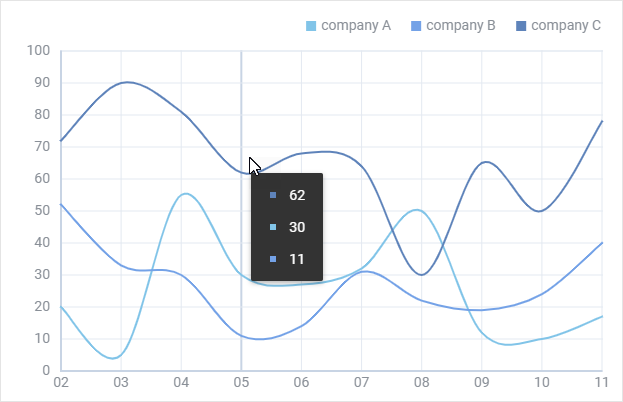
Related sample: Chart. Spline chart initialization
Related article: Line and Spline chart configuration
Bar and X-Bar chart
Like the Line chart, the Bar chart displays data for a set of periods. It works best when your data set has fewer than 10 items.
Bar chart
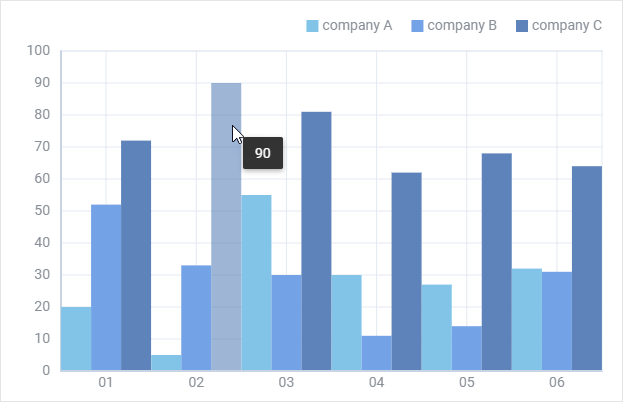
Related sample: Chart. Bar chart initialization
Related article: Bar and X-Bar chart configuration
X-Bar chart
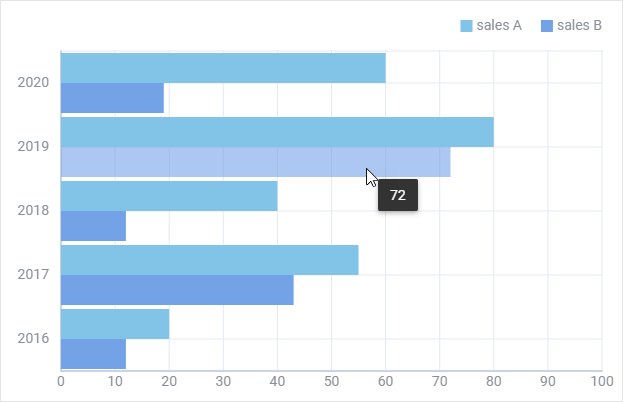
Related sample: Chart. X-Bar chart initialization
Related article: Bar and X-Bar chart configuration
Area and SplineArea chart
The Area chart builds on the Line chart, but fills the areas below the lines with color. Use it to compare two or more values over time.
Area chart
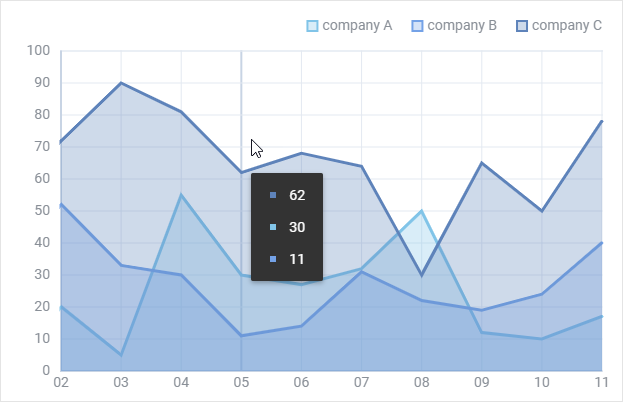
Related sample: Chart. Area chart initialization
Related article: Area and SplineArea chart configuration
SplineArea chart
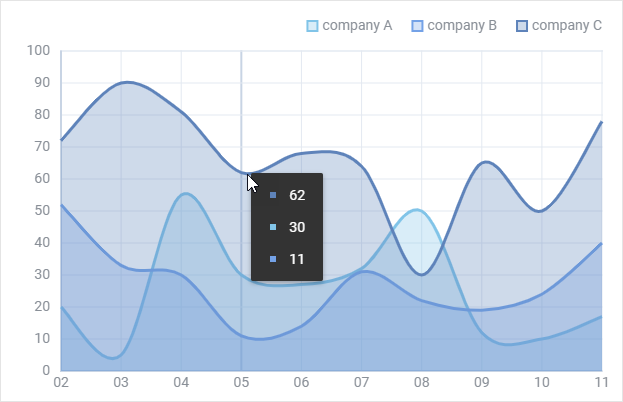
Related sample: Chart. Spline Area chart initialization
Related article: Area and SplineArea chart configuration
Pie, Pie 3D and Donut chart
The Pie chart and its variations are the best choice for proportions and percentages. Each chart splits a circle into parts that show how items in a data set relate to each other.
Pie and Pie 3D chart
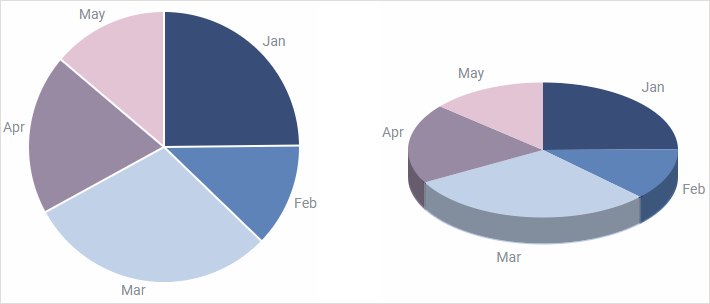
Related sample: Chart. Pie chart initialization
Related sample: Chart. Pie 3D chart initialization
Related article: Pie, Pie 3D and Donut chart configuration
Donut chart
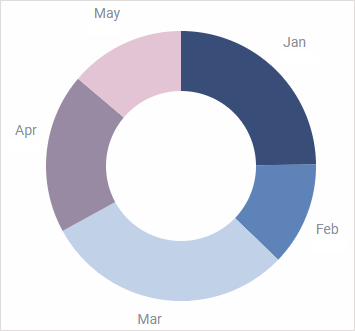
Related sample: Chart. Donut chart initialization
Related article: Pie, Pie 3D and Donut chart configuration
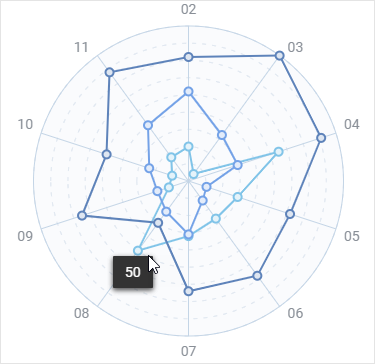
Radar chart
A two-dimensional chart that places one or more series of values over multiple numerical variables. Use the Radar chart to study how several parameters relate to one item (the center point of the chart) and to compare parameter values.
Related sample: Chart. Radar chart initialization
Related article: Radar chart configuration
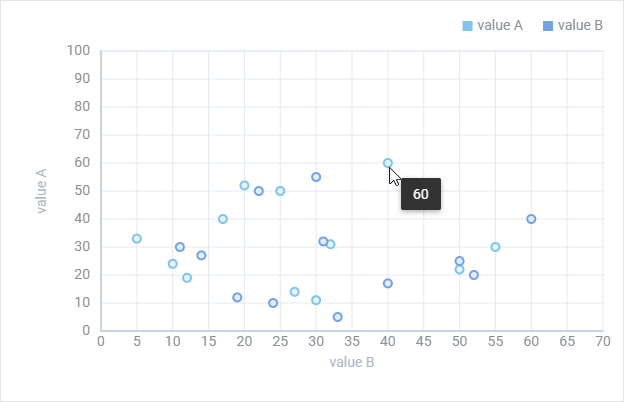
Scatter chart
The Scatter chart explores relations between two sets of data to reveal dependencies or patterns.
Related sample: Chart. Scatter chart initialization
Related article: Scatter chart configuration
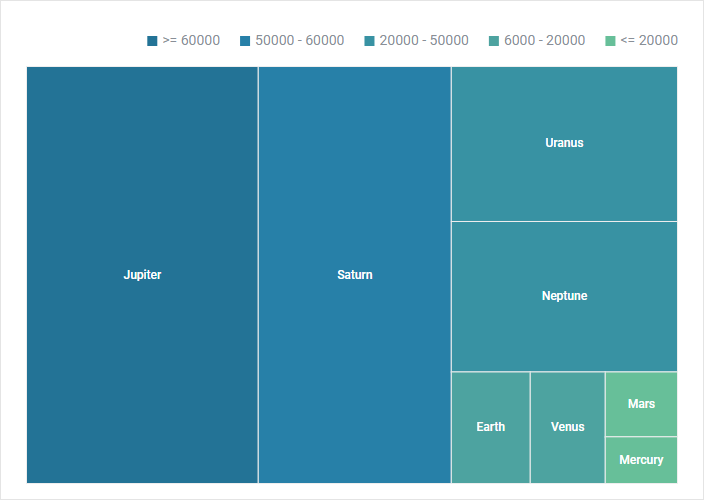
Treemap chart
The Treemap chart displays hierarchical data as a set of rectangular tiles, which makes patterns easy to spot. You can collect several tiles into a group. The size of each tile is proportional to the value of its data item.
Related sample: Chart. Treemap chart initialization
Related sample: Chart. Treemap chart with groups initialization
Related article: Treemap chart configuration
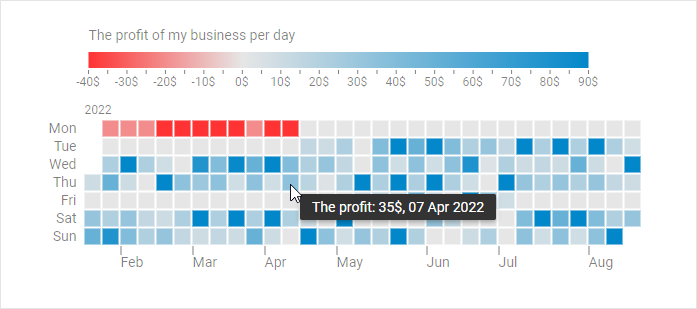
Calendar heatmap chart
The Calendar heatmap chart is available only in the PRO version of DHTMLX Chart (or DHTMLX Suite).
This chart is a two-dimensional calendar view. It uses graduated colors to show how many events fall on each day of a year or another period. The chart divides the period into years, and each year into months. Each cell in a column corresponds to a day of the week.
The chart helps you identify daily patterns and anomalies over the chosen period.
Related samples:
- Chart. Calendar heatmap chart initialization
- Gantt. Integration with Suite Calendar heatmap chart
- Event Calendar. Integration with Suite Calendar heatmap chart
- Scheduler. Integration with Suite Calendar heatmap chart
Related article: Calendar heatmap chart configuration